
Cancer screening at the baseball game, and what the UK is missing
Mike LaPorta
Tom Keith-Welsh Client Partner, Healthcare and Life Sciences, Endava
Tom Keith-Welsh has done almost every job in health technology, and James walks through all of them. They start with dissection rooms, the old operating theatre at St Thomas' and a lifelong interest in antimicrobial resistance. Tom explains what a pharma sales rep actually does and why those teams are shrinking. He covers launching a children's growth hormone pen in pharma advertising, building antibiotic prescribing tools at ICNet, and rolling out electronic prescribing in NHS hospitals, where one clinic's records were stored in a salt mine. The episode closes on the question James once fumbled on a panel: does pharma do enough to make digital health business models work? Tom's answer is no, because pharma isn't incentivised to change healthcare models, and he explains what startups need instead.
Pharma is not incentivised to change healthcare models.
James's questions in the order he asked them. Answers condensed from the recording and edited for length and clarity.
No, and that's because pharma is not incentivised to change healthcare models. Unless a digital product brings a medicine to market faster, improves market share or opens up a new patient population, it won't get long term funding. You might get a grant for a patient support service, but that's not the same thing.
They tend to run in cycles of about two years. A company sets up an innovation centre of excellence, brings in experts and does good work. Then the executive who funded it moves on, or market conditions change, and anything without a return in the next year is cut to fund a launch. It happened to me at Merck and at GSK, and peers elsewhere say the same.
When I joined, I went to find the person running it, and they were shutting it down. The technology worked, but the connected version cost several pounds more than the standard inhaler, and the margins couldn't support it after millions had already been spent. That's poor planning. Technology will do almost anything you want; the question is what you're trying to change and why.
Assuming that pharma will pay is not a business model
Assuming pharma will pay is not a business model. The product has to stand on its own two feet, and then pharma can help grow it. It needs a triple win, for the patient, the doctor and whoever runs the service. Programmes like PharmStars, which I mentor for, exist to get startups ready for those conversations.
You're trained in sales and in the science of the therapy area, then sent out to GPs, nurses and hospital teams to explain why a medicine matters, find out what gets in the way of using it, and offer samples. It's an unusual sale because you're selling to the person prescribing, not the person taking the medicine. And there is a strong culture of doing the right thing for patients.
Primary care time is short and very transactional, and much of the marketing is noise that gets binned. Companies have cut those teams and moved to telephone sales, which can be more effective at a fraction of the cost. The investment now goes into medical science liaisons and secondary care specialists who can talk peer to peer about the science.
There is a graveyard of good ideas where, you know, regulatory or even risk appetite goes to die.
My sales manager suggested it because I was good at the story behind a medicine. One of the most rewarding projects was a support pack for a children's growth hormone pen, with a character, colouring books and cuddly toys. The 10,000 toys were hijacked on the way to the client, then turned up on a market stall in Slough. The pack still won an innovation award.
ICNet was a family business, started in a shed on a working farm in the Cotswolds, whose infection control software was in about 80% of UK hospital trusts. It linked the health record with microbiology to spot hospital acquired infections and trace contacts. We extended it into electronic prescribing, so it could flag resistance and allergies, and that's where my passion for antimicrobial resistance came from.
It showed me the inner workings of a hospital and the complexity technology faces there. I visited every ward and unit. At a grand round, one consultant stood up and said the system would kill patients. His real problem turned out to be prescribing red wine, which we could add to the formulary. It went live on time and on budget, and I came away convinced everyone in that environment is trying to do their best.
Moving to paper light outpatients, I asked how records were prepared for clinics. Anyone who hadn't attended for two years had their notes stored in a salt mine about two miles away, and someone drove there to fetch them. Sitting in clinics, I found doctors used the last letter and last test result about 90% of the time, so scanning those would do instead of scanning millions of pages.
I came back to pharma because technology had reached a tipping point. Now, at a technology company, I think we can bring innovation faster than inside a big organisation, and run experiments with historical or synthetic data to get a signal without huge programmes. My consultancy is called ABQs, Ask Better Questions, because that's the key: better questions of the technology, ourselves and our organisations.
Everyone who works in that environment is brilliant and comes to do the best job they possibly can.
Automatic transcript, lightly corrected for names.
Pharma is not incentivized to change healthcare models. The cost of the inhaler itself is ATP and the cost of the tap, the connected one is £5.08. Assuming pharma will pay, it's not a business model. That's a, you know, wishful thinking. Hey, everybody. This week, I've got Tom with me, Tom Keith-Welsh. He is... Let me just get it up so I get it right. Client partner for health care and life sciences at Endava. Helps biotech... Oh, sorry, biopharma, med tech, and care organizations turn agentic AI modern engineering into improvements across the whole product lifestyle. Awesome what you do, Tom. And you've got one heck of a background. You were known to me for a long time as just the LinkedIn guy that always used to like my posts, always used to comment on my stuff, used to come to our events, always super supportive. And because of your, like, seniority in the health tech space, I was kind of scared of you, like, kind of, like, intimidated by you. And then when you, like, talked to me once, I was like, oh god. This guy's talking to me. He's done so many things. But you've worked all over the place. Sales, regulatory, you're saying earlier, pharma, the NHS, selling to the NHS, online pharmacies. You run your own business. You've gone overseas. You've done all of this stuff across the entire health tech space in technology and healthcare and combining it and all the rest of it. So this is going to be awesome man, like delighted to have you, so thank you so much for coming on. Well thank you, thank you for the invitation. Yeah, no, I'm excited to see where we go. Definitely. So I think, I mean, you... The the story here really is your career because you've done literally everything across the health tech space. And I guess the vantage point that you have now, I mean, you'd be a heck of an angel investor if you're doing any of that, I imagine. But I... We'll we'll we'll reserve that and see if you are doing it. Why don't you tell us the story? Like, where where on earth does this all start for you? And, yeah, how one turn into a guy that has done all of this across health tech and we'll touch on some of the stuff you've learned and some cool stories and
let's do that. Sure, yeah that's very generous introduction. I suppose probably being more of a jack of all trades and master of none fits relatively well. If I look retrospectively and think about it, the thing that has underpinned the journey I've been on has been what I'm interested in, what I'm passionate about, and really that has been around technology and healthcare. So that's why I'm I'm delighted to be on on the the name... The names podcast. But really, yeah, it comes all the way back to, you know, when I was seeing my a levels and what was I genuinely interested in, and I would put it squarely, a significant influence on me was actually my biology teacher, a guy called Rob Lloyd, who was a fascinating individual, if not a little bit quirky, a botanist, I think originally, so much so that he even had a particular species of plant named after him from his exploration from the Amazon. You know, a really fascinating academic but so passionate about it and who sort of gave me the bug, I suppose, for just being fascinated by the natural world and thinking that it needs to be explored and interested. Now, botany was not my strength. I'll I'll put that right up there. My garden is is is testament to the things I haven't killed, but it did give me an appreciation for the for the natural world. I mean, he did things like he had an axolotl in a sink in the biology lab, which he just kept there, and so we could go... He had a what now? An axolotl. You know what that is? I I I do not. Well, it's worth googling because it looks like a a thing of nightmares, but it's essentially a large newt with external gills that is an extraordinary... Why would you expect me to know what that is? I don't know, some people do. But it's fascinating thing. So he had one of those as a pet in a sink, in one of... Sort of Belfast sink in in the lab. So things like that sort of pique your interest as a I bet they do. 15 year old and doing all the things that, you know, are memorable, like dissecting pig's hearts and sheep's eyeballs and things like that. So a mixture of the macabre and the gruesome was was fascinating too, and then being able to connect a rubber hose from a tap into the heart to then pump it with your hands to pump water out on
the left ventricle. So that sort of thing stays with you, clearly, and just gave me then an interest to continue exploring how the body works and then ultimately moving into a degree which started out being... Well, actually, I wanted to go into anatomy, but I didn't get the grades because I was having too much of a good time. Fair. And I remember clearly going to an anatomy open day at at Liverpool University, and we were shown around... We said... Well, we were shown around the labs and so on, and and they said, oh, does anyone want to go and see the dissection labs? A bunch of strangers all looked at yes, please. And I go, has anyone seen a cadaver before? And everyone's like, no, we haven't. So we went into the room, and there were row of probably 15 or so cadavers that had sheets all over them. And, you know, obviously, approach with the respect that they deserve and so on. But what the the person, the lecturer who's showing us around... So... And I... So I'm gonna show you one now. And he pulled back the sheet, and one of them had a hacksaw stuck right in the middle of his head, closing out. And so a bunch of, you know, 17 year old, 18 year olds are like, oh my god. And this guy, calm as a... Cool as a cucumber, just turned around, bloody dentistry students. They never turn their head to themselves. So that was an introduction not only to the reality of what we might be doing, but also how at ease people can be in this environment with things that would normally seem quite unusual to the man on the street. That is quite unusual. Yeah. I can can remember having a similar experience actually with with with dissection. I can remember being shown around... I can't remember which university it was. It might have even been Nottingham where I ended up going. And, yeah, having having a similar experience. And all I all I could think of in my mind was, like, I'm a... I'm around people that could potentially be my peers. And I was like, don't faint. Don't faint. Don't faint. Don't, like, don't be sick. Don't be sick. And because you're saying, like, don't be sick to yourself and don't faint,
all I could feel was nauseous and faint. The entire... So I was dizzy, and I I felt nauseous. So I was like, this is destined to fail, just got myself into a right panic. I was just sweating. Actually, as I recall this now, it sounds like I had a panic attack, which which may may or may not have been the case. But Yeah. Oh, yeah. A bit of tunnel vision. Yeah. It's all fitting. Yeah. Exactly. So the memorable experience to get through. Yeah. When when you when you see your your your first body, which probably is only seconded by actually what ended up having it... Going to UWE in Bristol. Mhmm. But the the... One of our practical sessions, I think it was in our second or fourth year, I can't remember, but we went to the Bristol Uni labs, because there weren't many cadavers available in order to do dissection and so on. So we went to their labs to go and see it, and I remember they had a quite small old lady who was the human jigsaw puzzle. They had preserved all her organs and taken them all out and put them around Yes. And you had to put her back together. And you can be... Yeah. Yeah. So that that was quite a but they also had some some samples, suppose, don't know, what's it called, donation samples, you're allowed to keep up to a third of the body before, after a certain period, that has to be then, the rest has to be cremated or And one they had kept was actually someone who had donated their body to science, had lived a relatively normal, as far as they're aware, life, no medical history or anything like that. And they had done a section through the centre of the head and found that there was no white matter in their brain at all. What? They had just a big hole filled with... Into the earth with fluid, and they had developed... I mean, they they weren't sort of, you know, so high achiever, but they hadn't had an unnatural life. And it's one of the very, very few examples, and it was by complete chance. Wow. That's crazy. Is extraordinary.
It's extraordinary how little we know about the brain, quite frankly. It really is, really is. I can also remember actually it's funny I've never really talked about dissection and asked me on here that often but I can remember in ours it was remember us just having like just the well it was it was told to us you know we were young kids you know 18 years old doing this in in first year maybe it was second year but I can remember it being ingrained like to just have a huge level of respect for what you were doing here because of these people that have done the ultimate what felt like an ultimate sacrifice of donating their body to medical science. I think one of the things that it kind of it kind of choked me up or whether it choked me up is the right phrase or not, but it felt it felt like a ton of bricks had hit me was when often in the room there was there was a lot... There's maybe twelve twelve cadavers in the room that people we'd work on them in groups, and we'd have to isolate certain nerves and we'd have all muscle or organ or whatever it is and we would learn anatomy that way, which there really is no better way of doing that but you know sometimes you would come across the thing that killed them And it was poignant, that's I guess the word I'm looking for, and it did just drill home this kind of weird kind of feeling and certainly respect but also yeah it's bit too big for the concept is too big for you to kind of grasp particularly at that kind of age. Absolutely. But yeah it was obviously an incredible way to learn but wow, was it powerful? Wow, was it powerful? Well, a 100%. Yeah. And I mean, I was looking at it as a sort of more basic anatomy course, but it was really interesting to see someone's lungs and go, oh my goodness, they're full of black spots. And I go, what what happened? What did this do? This was a nonsmoker. They just lived in the city their whole life. Oh, okay. And then you see a smoker's lung and they go, oh my goodness. And... By that point, I was doing pharmacology and physiology rather than biomedical science.
That was an interesting story I'll come into in a minute. So I was more interested in starting to look at drugs of disease and abuse and also the science of pathology and other areas like that. So seeing that out of the textbook and in a person was, yeah, a very powerful moment, and and you do, yeah, recognize people have either donated their their their their bodies for you as an individual to see their, you know, their body Mhmm. In some cases in perpetuity. And in fact, I've I've I've always, since then, had a interest in the history of medicine and surgery. I've been... Just... About six months ago, finished reading a a book by Lindsey Fitzharris called The Butchering Art, which is a history of Lister and others. The moves pre anaesthesia, pre antibiotics into the sort of modern age of surgery. And it's fascinating, gruesome, yes, and fascinating to see the challenges that were put, what was accepted at the time. I'm not sure, I mean, it was always an interesting fact to me, do you know that John I'm sorry, Liston, who who developed the the knife, the surgical knife, which is a great big long thing like this, specifically to for speed rather than anything else. Do you know how long it took him to the record for removing a leg? No. Twenty four seconds from start to finish. Yeah, he was the best. But then you see images of where they were operating, what they were wearing, their hand hygiene, the lack of, say, anaesthesia, etcetera, etcetera, etcetera. It's fascinating to see that, and again, gives you an appreciation of modern medicine. Yeah. And if you ever have the chance, would highly recommend that it open very often, but going to the old operating theatre museum just near St Thomas. Guys. Yeah, fascinating.
We actually did an event there when I ran Accelerators. We had one of our Accelerator events there, which was again really powerful. You're absolutely right. I was I was gonna ask you if you've been there actually, like that museum of looking at the history of medicine and what what what was used and... Yeah. It it is it is crazy but great event space as well because you literally go into the old operating theatre which was a theatre. Assume that's where the word comes from it was a literal a literal theatre where it was a combination of a few 100 people. And entertainment know, that that was a thing. Education and entertainment, really? Yeah. People were paid to come and watch. Yeah. Yeah. So... And it was fascinating, yeah, there to... Oh, well, it's a Christopher Wren built and designed church, but the operating theatre was put into the roof for natural light. So those have got skylights in the roof, and they could connect to the hospital and bring women in. They knew was women because they did a DNA analysis of the blood and the sawdust under the floorboards. They knew it was women's blood, and they there was even accounts of there being so much blood coming out that it would then go through the floor and run down the walls of the church below. And so you could be in in the church and have blood running down the walls. Yeah. So it it... And it's it's... It was, yeah, extraordinary to see that the techniques, what was accepted. Some people would say, if I don't get my leg taken off, I'm gonna die. But my chances of dying are slightly less if I'd have it taken off. And the infection rate was massive and so on. And in fact, that links then actually into another passion of mine, is around antimicrobial resistance. Because that is the, I mean, it's well discussed around growing silent burden that is ever, ever present that if antibiotics didn't work, a lot of our expectations of standard of care and what we would see as normal things to do, like a hip operation, just stop being able to be done safely.
So you really are grounded in hard science, aren't you? Like, right from right from your education, your interests, all of this stuff is very, very healthcare and science y. But you started your career in pharma, is that right? Yes. So after I graduated I went and well I did something that was nothing healthcare related. I ran a cocktail bar in the French Alps for a season. And what did and what did that teach you, Tom? What what did what did you learn running... Doing a ski season? My banking and restaurant French is very good because I was doing the payroll I was doing the payroll and and things like that. And you're carving of course. Worked out. Turkey's on through the slopes. Yeah. Perfect. Perfect. But when when the student loans company came a knocking, yeah, I initially went back to live with my parents in in Somerset and went to them. Well, it seemed to be... Well, I'll tell you what it was. It was actually my third year of university was a sandwich year where you go out and work in industry. That was an appealing thing for me to do when I signed up for that course. Now initially, most people who are doing biomedical science go and work in a biomedical lab in a hospital or pathology lab or something like that. I knew fairly on my lab craft was not really that good or really given me much passion or interest. But again, credit to the university and the faculty of applied sciences there. They managed to get an industrial placement Glaxo Wellcome, as it was, in the Regulatory Affairs department. And so I worked for a year in Regulatory Affairs and that confirmed two things to me. One, I didn't want to work in regulatory affairs, but two but two, there is a whole industry based around trying to make patients better. And I knew I didn't have the the the grades, or the inclination to become a a health care professional in in in the truest sense. But I had a passion for it, I was interested in it, and I could see a commercial route to do something that makes a difference, and that was really energising for me. So the best way to do that was to go and carry the bag, as they say, and become a sales rep. So I started out working for Merck KGaA, German Merck, not The US one, Devon and Cornwall. So hence where I went to go and based with my parents in Somerset. So the commute was quite
a lengthy one, especially during summertime. But I was working on a mixed portfolio, they were just launching a seven day HRT patch called Fem7, which was soya plant based oestrogens, rather than equine derived oestrogens, and also two products, one for angina, nicorandil, and a beta blocker for heart failure. And that was more secondary care rather than primary care. And so, yeah, we started doing that and then I was there for about three or four months and I hadn't really lived at home for about seven years by that point, so when they said we've got an opening for a role in West London, I was like yes, I'll take it. I think my parents and I both agreed it the best thing for everyone. And so, yeah, I was covering West London all the way from High Street Ken out to Uxbridge in the West, and down to Southall, and to huge variety of different locations, environments. You know, the surgery on High Street Ken was quite different to, you know, quite a few of the ones, the further west you go in London. And that lent into something which I've always, you know, found to be relatively easy, trying to talk to people in their environment and try and understand what their challenges are and then seeing okay well there's something here that I think might be useful. I'm just thinking like a pharma sales rep right, people know the term, they might not know exactly, and I've dealt with pharma reps when they've come around into our anaesthetic department and they you know come into our anaesthetic office and show us various bits and bobs and evidence and then the clinical director will sometimes make a decision or have a meeting. I imagine there'll be people listening that don't actually know what that job entails and so just from like a real basics perspective, you've mentioned a few drugs there, What does it actually mean that you're going to places within a territory
and and selling those drugs? Like, does that what does that actually mean? Because as I say, I think that is a bit of a nebulous concept for some people. Yeah. Well, it it used to be, I would say, that the the route for anyone who wasn't a sort of research scientist or, you know, I I thought I wanted to go into marketing. I don't know anything about marketing, but, you know, that's... I mean, Yeah. So... But I thought it was my way to enter the industry. And as a graduate with a health care and life sciences degree and a genuine interest in it and so on, it really is... Was a great way to, yeah, enter the industry, build up some knowledge, and develop some skills which I found useful, you know, to this day. So when you go on, it's it's a bit like joining, you know, the military. You have, like, an an an initial training where you go in for three weeks, if you're lucky, they take you off to somewhere fabulous to go and do your training. Mine was less so. It was Greenford in West London, but Greenford's nice. And, yeah, you start off with some basics, like sort of sales training, like role playing, you know, deeply uncomfortable things for a for a, you know, a British British Irish 21 year old to start talking to strangers about something they know nothing about, but then also become very well versed in the science behind the therapy area in which you are going to be operating in. So with HRT, obviously, a loss around the menopause and also gynaecological surgery as well, and if people have had hysterectomies and so on. So much so that I I became quite a popular friend for a lot of my mother's friends because they were all sort of going through... You know, so what I don't know about spotting is not worth knowing. And and I I mean, I I was also very cautious about saying, look, I know Merx... What Merx has told me. I'm... You know, and I know my own sort of scientific training, but please don't take this as as advice
because I don't want to be held responsible for, you you know, being asked, why have you taken this or why have you done that? So I had a sense of responsibility quite early on. But yeah, get well versed in the science, in the competition, and why clinicians should be talking to you. And that's the job of the company years in advance of that. When they're developing an asset, they look at, okay, is there a market for it? Is there an unmet need? What does that look like? What's the differentiator? And then there are things like, okay, how do we manufacture it? How do we price it? What markets are we going to get it approved in? What's the science behind it? But all of that being done, you get to the point very towards the end of the cycle to get to launch where you're training a sales team to say, here are the messages that we want you to communicate with a GP with a special interest in women's health to a women's health specialist nurse in a primary care practice. If you get the chance to see a gynaecological consultant, here are the messages you should be giving to them. And so you are somewhat thrown out into the wild. You have your sales manager, you sometimes have people coming along to... Sales trainers who come and sit with you for another day whilst you're going around knocking on doors. And, actually, it was it was fascinating to see as part of my application process to get the job, they said, please try and find a local drugs rep where you live because there will be some and go and shadow them for the day and just check. It's what you want to do. And I... I'm I'm... Disappointingly, I've forgotten the name of the chap who found through my doctor surgery, who was a... An Eli Lilly rep. And he took me around for the day, and I thought this is the biggest laugh ever because he'd been on territory for years. He knew he knew everybody. And all he did was turn up with... I I kid you not, in the back of his car, he had a stack of cakes, like, in place. And every place he went, he'd say... He'd go, oh, it's John with the cake. How are you, John? Wanna come through to the back and give everyone a slice? And you can see all the other reps all kind of sitting in the in the waiting room waiting for possibility
of an appointment. And I thought this guy's got it absolutely nailed. Now I thought I better hone my baking skills because this is clearly the way to do it. Now what works in Somerset is quite different to what works in West London. Interesting. Okay. This sort of was a sort of, again, cultural changes and evolution. So, yeah, go out, you talk, you get feedback about the challenges that clinicians have, the patients that they might want to try it on, you have samples that you can say, look, you think you'd like to try it on one of your patients that you've got in mind. So a lot of selling techniques in terms of trying to personalise it for the individual, but it is an unusual sell, and anyone who's worked in the industry will say that, because you're not selling to the end user, you're selling to the middleman who thinks it's the right thing be end user. And you know there are lots of other things that sort of happen all around it in terms of you know the medical science liaison to go in beforehand talking about the science of plant oestrogens versus the equine derived oestrogens. I mean that's another thing, did you know that most HRTs were derived from pregnant mares urine? No, did not. Yeah. So that was a new information to work on a lot of us actually, because then they were trying to introduce these plant based ones, soya based oestrogen as an alternative. Despite my best efforts, it had a limited life because it must have been two or three months after starting on territory in West London. The Million Women's the Million Women Study came out, and it was in the Daily Mail and so on, saying that HRT gives women heart attacks and strokes. Oh, yes. Which obviously then sort of shut the door. It didn't matter how many cakes I had. They shut the door on any conversations with anyone talking about new age, think, and then in it. But we're not the same as the ones that were studied. No. Not interested. So that sort of put a real block on me being able to do my job, which was disappointing. But I was lucky. And Merck were quite unusual like this, that normally when you're a new rep, you only work in primary care. You've got a small number of practises. You go out and you get to know your doctors, nurses and so on and build relationships. I had a secondary care portfolio of these cardiovascular products, and that allowed me to go into hospitals and go and find the cardiovascular team, care of the elderly team,
and immediately I found this a much easier process to do and build relationships because you are genuinely building relationships. And with my background in terms of pharmacology, I was able to talk much more knowledgeably and effectively around what are the challenges they have in current treatments? Would they consider using this because of the side effect profile compared to existing beta blockers they use in heart failure. And I was naturally drawn to that longer form type of relationship. I could understand them a lot better and they could trust me to deliver on what I said I was going to do to help them. And primary care was great, but it was very transactional, time was short, and now it's even shorter if at all do you get primary care sales teams. And then GSK has just got rid of a whole load of their established products, primary care sales teams. And that's not unusual, that's been a trend, because time is limited, and you don't have the opportunity to build those relationships. Where they are spending time and money is in the medical science liaisons, the secondary care, people who are more expensive because they have degrees in medicine, pharmacology and other specialist subjects that they can go talk peer to peer, build relationships and ultimately support each other, and communicating science, you know, about the treatment, the medicine, the therapy area in a way that It's an odd concept though, to be sold, that stuff. It's odd concept in the sort of grand tapestry of how healthcare works, because on one hand you've got phase one to four trials and something is declared safe and effective. You've then got like a nice guidance pathway where it will slot into the approved way of doing things. This feels like a sort of side route. It's like a it's like a side quest to that. It's just like, oh, we're just gonna sort of tempt some people with it though. We're just gonna see if there's these early adopters that... Yeah. It's one of the most expensive parts of a pharmaceutical launch because you've got Interesting. Historically hundreds of people with cars, phones, computers,
etcetera, out in the fields trying to talk to customers directly to try and help them understand why they should be considering this product. Now it may be an easy sell, it might be this totally transforms the standard of care, know, I mean there's plenty of storage. Yeah like the first statin, I imagine that is an Or absolutely GLP-one. Yeah, you know, so all of those sell themselves and then you're making you know good commission, you're hitting your targets, teams are growing, everyone's happy and the cost is The world's a better place by the way as well, that's the other thing. But yeah, the economics of it are significant and anything that can be done to help improve that model, the companies will look at aggressively. And that's been reflected in the past few years when you look at, okay, how do we find new customers? So we're looking at social profiling. We're looking at triaging customers auto... Autonomously, and then saving the humans for the ones that are behind. Sure. And some territories, there are no people covering those territories. It was purely a telephone sales team, and they were shown to be much more effective than having someone on the ground and at a fraction of the cost. So, you know, the commercial model has to work. And the days of having, you know, 500 reps for a single product in The UK, which some companies did, are long You can't justify that anymore despite, you know, they're still being blockbuster products.
Just it doesn't make any Just so I understand the economics of this and actually so I understand where this sits into healthcare more broadly then. Is the reason that it's so heavily funded by the pharma companies, is that because the success of a drug is very dependent on those early adopters. I suppose I'm actually thinking out loud here like what I suppose what other way would it start being used? Mean once it's been declared as safe and effective in a phase four trial then I suppose what other way would it be used, it has to find its way into local guidance first, it's then used, there's then data, there's then yellow slips for adverse effects and all the rest of it and then you build a picture for NICE guidance, is that broadly what we're talking about here? Those are there are market access people and teams who are looking at all of those things and historically the sales teams have either been helping to get to that point or that's already been achieved. And now it's a matter of physically getting in front of people to say, you know, I've been in conversations with clinicians where you go, here's something that is more effective, fewer side effects and cheaper. Would you consider using it in your patients? No, because I know what I'm giving them and my decision is final. Or they may have a sweetheart deal on a wholesale with a group of buying practises or something like that, which means that they actually get at a fraction of the list price and we're not competitive. But that's up to me as a salesperson to find out, understand, and then come back potentially with a alternative. And as you know, from your time in in practice and is very much so the case with with anyone now is they just don't have the time or the No. Ability to be able to keep up to date with a, the science, and b, a lot of the marketing stuff is just noise. That'll just get a bin. The time... I wouldn't even get into the industry behind all of that, the costs that get thrown behind the marketing side. Where there is continued investment in, though, is in science led, peer to peer conversations. Because if there genuinely is an unmet need that is being addressed by novel innovative science, which is what pharma companies and biotechs are all about,
then they to understand that yes, we've got the key opinion leaders who have been paid to do the trials, but they should stand behind the results and go we believe this is transformational or genuinely changes the standard of care. Those were the profitable conversations, and I mean profitable for everyone, not just the company, I mean for the patient, getting the best standard of care that they should. So, yeah, sometimes it was just a numbers game, but those days of mass market thing with people are gone or very, very limited. If I was a sales rep now, I would be training up to become a specialist in a particular area, and I've seen people move from company to company, especially in the oncology space, in the kidney space, in the liver space, and obviously, metabolics continue to be a bit of a crazy, unpredictable time. And if you're able to bring that level of expertise and specialism to a company, then you're valuable to the company and your customers. Absolutely. God, I could do the whole podcast on this, I think it's so interesting. But I appreciate you shining a light on that because I think there's a lot of cynicism around pharma. It's actually cynicism that you'd have to battle and with the messaging, with the media that you're trying to, with the comms that you're trying to do and actually that's why building the relationship is so important and that is just the sales lesson more broadly I guess, it's just the modern wisdom on sales is to truly understand your customer and actually just try and add the most value and then obviously just have a product that works and does what it says it does. And that kind of thing and do say as well don't they that you know having a sales job early in your career is absolutely ideal for professional life and life life as well, teaching all those skills. One thing I would just add to what you said there in terms of sales was also due to the nature of what we're selling and the potential impact, there is a strong, and people may not believe me, but there is a strong sense of doing the right thing Interesting, yeah. Traditions and patients. You know, like I said, I I was very early on saying, here's a new thing to my mum's parents, which I shouldn't have been doing, to be told, but my mum had a fem seven mug on the kitchen table, I'm like, oh, what's that?
So, you know, it was all done. But, you know, you're taught and modelled from at every point to do the right thing in terms of I'm not just gonna sell this because I'm selling print cartridges. And I want you to buy as many as possible. It's actually about is this the right thing to do? So that moral guidance, although people might be cynical about it, is very much there. Now there are plenty of horror stories about people not doing the right thing, but I would say in my experience in the last twenty five years of being in the industry or around it, that has been the consistent themes around. And yes, commercial profit making organisations to generate the, you know, shareholder return, but they are based in innovation and they are based in doing the right thing with doing all the patients ultimately. One of the things you talked about before was the Daily Mail headlines and the effects that that had. So the power of media. And this kind of segues nicely with your career because you did something really interesting after working in pharma sales, and you went towards that world, if I'm not mistaken, and you went to advertising agencies. Yeah, I did. I did. And actually, the media side has formed a theme, which actually I'm working with at the moment with one of your previous guests, Kishan Rees, on Ah, yes. Medical misinformation. But I'll I'll I'll come I'll come back to that. But, yes, I I was actually... My my sales manager at Merck, a guy called Mark Smith, who had been at the company for some time and and was... Died in the wool, East London, excellent, excellent sales guy, on one of sort of our regular feedback sessions, you know, the sales had been okay, I'd met my targets in secondary care, I hadn't met my targets in primary care, and there was obviously some headwinds, as they say. But we were chewing the cud in a Sainsbury's car park between appointments. And he said, I've just been thinking, Tom, you're really good at understanding the story to tell about the medicine. Why is this important? Why is this different? And he said, your sales are okay, but I think you'd be much better off looking for a job in advertising. I was like, really? Totally left the field, I was like, what do you mean? Someone in pharma advertising. And I said, I'm sorry, I don't know what you mean. And he said, there are agencies that only serve pharmaceutical companies
and they're all about launching new products and doing campaigns. I was like, oh, okay, this is a bit closer to my pharma marketing objective, which I'd randomly set myself. I have an enormous amount of credit due to Mark because I think it's probably... See, in twelve months' time, was probably gonna have make me redundant anyway. But he just... Here... Here's a path I can see for you. So the panel suggestion was was well understood. And, yeah, I went and started working for a for a pharma advertising agency in Richmond in in in West London, which was, I think it was probably about 40 people, but had some big clients like Boehringer Ingelheim, AstraZeneca, Ipsen, AstraZeneca. So there were some significant clients, big global launches, doing some great work, had been winning lots of awards, and I went in as an account exec, so similar entry level role, but had to have a degree in health care, life sciences, And the fact that I'd had some sales experience by then probably helped too. So I knew the end user, as it were, I knew a bit about the science, and then my job was working on an account. So, for example, with Ipsen, they had a growth hormone self injection pen called NutropinAq, which was fantastic for children with growth hormone deficiencies. Also quite a challenging brief because you're dealing with children rather than, say, people with cardiovascular disease. Launch of Crestor was one of our big campaigns and So things like working with NutropinAq was, again, one of the more rewarding times in my career, both professionally and personally, because you felt as though you were genuinely helping patients in knees to have healthier and better lives from the start. And so that again demonstrated to me the difference between the campaign for Crestor, which was mass market, we're looking at cardiovascular specialists, general practitioners, we want endorsement from the leading cardio guys to say this is better than Lipitor, which was the biggest selling medicine in the world at that time, etcetera, etcetera, versus NutropinAq, which needed to be much, much more focused on children. So,
if you were prescribed NutropinAq, the brief was to build a support pack for the child. So the pen itself looked like an iMac. It was sort of see through green plastic, and it looked quite cool as far as injectors go. And then we had a matching box that would arrive with your prescription, which was probably about a meter long. And it had coloring books and it had instruction of DVDs, and we still use DVDs. It had cuddly toys, so we created this character called Neutropin or Neutro, who appeared in all the materials and was on the box and got stickers and stuff like that. So it just making it a much more exciting experience for the child or they were more engaged in it. Engaged experience, yeah. And in fact, I had one story with that. I was in charge of sort of coordinating all the bits to come together for launch, and we had to order 10,000 Neutro toys from Taiwan. Think it was. It was South Korea or Taiwan. Anyway, there was a long process of review and, you know, you can imagine medical legal review for a kid's toy. You know? Is that, you know, is that right? Is that the right shape? Is that the right colors? Blah blah blah. Anyway, got the order off. They were being manufactured, and it it it was all delayed and took too long. And I was literally tracking the ship coming into Southampton to then be delivered to the offices in Slough, and it arrived Southampton at a cleared custom... I rang the client. Was like, oh, they... They'll be delivered to you at, you know, 11:00 today. They're on the truck. Brilliant. Okay. Thank you. 11:00 went. 12:00 went. Okay. So then I I rang up with... Don't suppose there's been a delivery of... No. But we... We've had the police here. Right. And I said, well, it appears that the lorry that your your cargo was on was hijacked on the Great West Road, and they they take it... They not only clobbered the driver around the head so that he was beating and stuff, but they then nicked the lorry and disappeared with it. And I was like, you're joking. Obviously, is the driver okay? And so on. This lorry disappeared. So I was like, oh, oh my god. You know, I I think I've got a valid excuse for it not arriving, the fact that it was hijacked. And
then apparently, about two weeks later, suddenly on Slough Market, there were Neutro toys appearing for a pound Of course, there were. Yeah. But yeah, so it it it it... You can plan for everything, but there's sometimes it's it's taken out of your control. But then Yes. After that, that pack won the first innovation award at the PM Society Awards. There was a Jeff Brooke Award, which was in memory of Jeff Brooke, it was an innovation award, and we won the first one with NutropinAq. That's really nice. Got to stand on stage with, it was either Jimmy Carr or Michael McIntyre or whoever it was earlier in their career, and that gave enormous sense of satisfaction that a, we'd done something that we stand behind, but it was also recognised as being different and meaningful, both from a patient's perspective, but also across the industry. So I'm not saying that it changed the way that children's medicines are dispensed and managed, but as I say, was very rewarding personally to help put that together. Working in such a creative industry then after, of course, you're still within the pharma industry of course broadly, but going from a sales industry to a creative industry, did that give you a different appreciation? Although you said you already had an eye on marketing, maybe it was already part of your disposition already appreciation of the nuance of design for example and all those different things. But did it feel like this is more home for me or was that learned on the job that there's a lot to pick up there like creativity and pharma? There was actually, I actually went to, I don't know if you went to it, it was at the Welcome, it was a an exhibition on design in pharma. A very busman's holiday for me on a Saturday going to this thing, but I thought it was just amazing. Went through all of the kind of the history, and this is really nerdy now but like this is I'm loving it. Went through, I'll go in detail then, it went through the history of the design of packaging, it had a whole section on like typography and how typography had moved through the ages and why
certain typography was how it was for how visible it was at certain distances and different types of patients and all this sorts of stuff, colours and the way they used lines to denote direction and all these different things like it was wonderful. Was honestly, it was what I was in my absolute element on this stuff. However, if you told me at medical school that I'd be in my element there, wouldn't have been able to point to it. However, my hobbies were creative and my learning was science and so actually it did make sense. It's just that sadly no careers adviser told me that was the place I could go. So I'd have loved this job, I'd absolutely love this job. Did you know that going in or was that something learned for you? No, definitely learned it when I arrived in there because I hadn't really had the opportunity to work with anyone in it from that creative a background in a professional way. My mother and my sister are both good artists, and my grandmother on that side are all good artists. I just didn't have that gene. Draw a square and a house and technical drawings, but I I can't draw a landscape or something. So so to go and work in a professional capacity, I found that really interesting. And there were some fantastic creatives who were very experienced and had worked together in a number of different agencies in consumer brands beforehand and then had come into pharma. So they were learning about the regulatory environment and what we can and can't say and how much and how often and blah blah blah blah. Putting a creative design or creative process to a scientific story was really fascinating. And in another agency I worked at called Swordfish, who were based in Bristol, one of the campaigns that I worked on which really resonated with me a long time ago was one for Reminyl, for dementia, and the campaign imagery was of an elderly couple and the man was grading, you know, the image of him was sort of fading away into nothing, and the strap lines on that, don't let them fade away. And to me that really resonated as a really good understanding of what patients feel when they have a partner who has dementia. Now my father had dementia many years later, and that just came back to me, was like wow, that just confirmed to me how accurate that imagery was. And it was award winning as well, and so on. But yeah, to have that creativity and thought and
that process applied to a medical scientific story was really fascinating to see where it would go. And some of the ideas that weren't approved were great, but ultimately they have to get through sign off along with everything else. And it's such a delicate creative process that as well because you're dealing with so many people that have a stake in that, whose opinions you really care about and you can, a sleight of hand and something can look way off, it can sound way off, it can feel way off and I think you know that's probably language that had been learned over the course of many, many, many patient interviews that you know you start to become comfortable with it at that point, but then you have to test that message again and again and again and make sure that it's okay, the imagery and what does that mean and what is this really communicating, what's the message behind that and how that's color graded, how that's represented and da da da, like there's all of this that feeds into a different feeling and a different result quite frankly. Don't forget there's a client involved as well and sometimes they just say JFDI and I I want it this color or I want this in there. And they go, but it's not on... This isn't... You know, that dilutes the brand or the message or... Okay. And ultimately, you know, you are subject to... You know, they're the client. They're they're they're the boss. They've gotta say yes. And so, yeah, that that... That's an important dynamic to understand as well. It's not a conversation unfamiliar to me. It's, working working in a service industry doing communications for Yeah. The clients. Indeed. You're like, yeah. But but there's there's ABPI guidelines. Do you wanna adhere to those? There's Well well MHRA can can look into your Yeah. There's something You do. If you can evidence that, then you're then then you're certainly winning. Yeah. But where it's like, oh, the MHRA just will slap you on the wrist. They're like, can take a few slaps on the wrist actually. But but if I get my product to work, then I realize my vision of the world where everyone's in a better place. So Yeah. This is good intentioned.
And and it's like, oh, gray area. This is interesting. Yes. Yeah. And sometimes, yeah, a good... There there is a graveyard of good ideas where, you know, regulatory or even risk appetite goes to die. That's true. That's something that I've struggled with in all my balls is people's appetite for risk, especially with novel technology. If you don't understand it, then you're gonna say no because if your name is on the sign off or whatever it is, then you obviously take it a bit more seriously. And I understand why people feel that way, but I also feel that sometimes people do it out of fear. So why not work in that forever, Tom? What happened next? Well, I worked in two agencies and the second one was in Bristol and that was a group of three men who set that up and it was clear that they were going to take it as far as they could and their retirement was sorted, but my future was not necessarily at all in in in that environment anyway. And and also, I was still on this sort of quest for a marketing role. And and as again, I don't know why. I've had no training in it. I've done a sales and an advertising job, which I've done okay, yeah, and and I had to learn to learn. So... But I did... One thing I did sort of start to really lean into when I was at Pan and then at Swordfish was technology, because the internet was going nuts, you know, Facebook was there. I was I was the new media guy because I could build a website. Know, I could use Apache. I could... This type of thing. So suddenly, oh, well, anyone who wants a website, you know, go and talk to Tom. Mhmm. He'll set up a Facebook page for you. You know, it was it was that level of technical. Okay. Got it. I'm not a coder or anything like that at all. But in the agency, I was the new media guy. So I sort of lent into that, but it was more technology driven. For example, when the Nintendo Wii came out, we hacked a Nintendo Wii for a European haematology association meeting in Copenhagen, I think it was, or Berlin, anyway, one of the two, Berlin or Copenhagen, on the stand for Shire was the biggest TV screen we could find. The medicine was for lowering white blood cell counts, so for essential thrombocytopenia, And we'd hacked a Wii so that you you had a... The visual of a blood vessel going across, and you could use your Wii controller to zap the white blood cells. And
this was groundbreaking at the time. But... And it was it was brilliant. We had a cue for people to play it. Everyone understood the mode of action. Everyone understood, you know you know, you... The branding all over the If you didn't walk away knowing what the drug did, then you're an idiot. I'd have passed far more medical school exams first if I was doing my pharmacology on the way, oh wow, drug mechanism, oh. Yeah, exactly. So I've always sort of learnt into that, but then the opportunity came up, I cause wanted to stay in the West Country for a family started business, a really innovative business that called ICNet, which is infection control net. And they had built up a product and quite a significant market share in The UK, I'm talking about 80% of hospital trusts had their software. That is quite significant, yeah. Yeah. And this was in the days where we would deliver a server and have to plug it into everything, and it was a local thing, and in principle quite simple, but in reality relatively complex, connecting the electronic health record with the microbiology system. You could see, okay, someone has got, because all the hospitals were starting to be penalised for C. diff and E. coli and MRSA. So you could see, oh, if they had a positive result more than forty eight hours after they'd been admitted, then that was the hospital acquired. If they got it on a nasal swab before they entered, they brought it into the hospital. And then you could do contact tracing based on where patients have been and who they've been in contact and all sorts of cool stuff the infection control team could do. So they've had an opening for a marketing manager. So I thought, oh, it's a healthcare technology company. It's in the West Country, just in between Cheltenham and Gloucester. Perfect. And I remember they're an extraordinary family who who built and and and ran it. So I saw the addresses. I come for an interview. It's called the Dell Centre in Painswick. Painswick is like this bucolic Cotswold town with, you know, a thousand year old yew trees outside the church. The Dell Centre, that sounds pretty impressive. So anyway, followed the postcode
and ended up going along this farm track, and then I saw on the side there was Dell Farm. I was like, well, I must be close. And turns out Dell Centre were all the sheds at the back of the farm, it was a working cheap farm, and they had livery stables and all the rest of it. Amazing. They built this international healthcare software business there. So it deeply... What an unbelievable side quest for a farming family. Michael Howson who founded the company with his daughter had started it from literally in the shed. And it turned into, as I say, an international company serving many, many hospitals. And they'd gone through all the ISOs and all the data privacy and had a really fantastic team of people who would go to the hospital, instal the servers, maintain it, do software updates, train the teams. And so, yeah, they were looking to expand their portfolio and grow in other territories like The States and China and South America, which they were successful at. Now the company was ultimately purchased by Baxter. And I know some of the people from the company are still there. But one of the things I was most interested in whilst I was there was actually helping to build a new product, which sort of extended on the existing one, which also included electronic prescribing that was starting to become bigger in The UK, certainly. So suddenly we could start to do antibiograms. We could start to do resistance based prescribing. We could start to do all sorts of really interesting things in terms of, you know, alerts don't prescribe that they are allergic to it or they are resistant to that antibiotic, do not prescribe it. So it helps a lot in there. So that was something we built and I had a key opinion leader group that I built from scratch, including people from all over The UK, Kieran Hand is now the antibiotic pharmacist, lead antibiotic pharmacist for the NHS, and a number of different people who were in the antibiotic pharmacy field. And that's remained a passion for me since then, because that's when I learned about antimicrobial resistance. Why is there an opportunity? Why is everyone so excited about this product? Right.
Yeah, this is a big deal. And so that then sort of gave me that passion for that area. And yeah, was a fantastic team. And as I said, they eventually got acquired, but I was there for a number of years and certainly was around for the help developing that product, which then led me again, a family owned company. So I've worked for myself, family owned companies and then all the way up to global multinationals. Another family owned company again, I could see the long term future in my position there was not necessarily guaranteed. And so I had been chance meeting at a pharmacy conference I'd been at with a guy who ran an online pharmacy in The UK, who was a bit of a, let's say a wheeler dealer, living on the margins of, know, certainly was legal at the time, but keen to grow. And I said, I'll go and advise him and to do some consultancy. And that enabled me actually to leave ICNet and go consulting full time. And I did a number of different contracts. And ultimately that didn't end well, but learned some valuable lessons apart from anything else that had some useful things I've done. So wrote all the SOPs and got a Swiss regulatory authority approval for a wholesaler in Zug in Switzerland. So we were able to import and export medicinal products there, and that was... I I would... I I can honestly say a wing and a prayer, but I did it and Swissmedic preached it. So I was like, well, that's another tick in the box that I didn't expect. And and then,
setting up and... Couldn't do it again, but it's on the CV if anyone wants Yeah. Me to Yeah. I would definitely need ChatGPT to help me. And the other thing I did was set up a new online pharmacy based in The UK, like a bricks and mortar pharmacy in but a trading got the pharmacy license, GPhC, got the wholesaler agreements with, I mean because it was all focused on lifestyle medicines, it was with Pfizer, Cialis, Viagra, hair loss, and other things like that, but as well as some aesthetics as well, so some fillers and Botox and But things like yeah, that process was fascinating to have, be building book some more to pharmacy, getting responsible, I was a responsible person, actually had a pharmacist on the licence, yeah, all that sort of stuff. So building those processes were great, it didn't last for long after that, but it was a valuable experience nonetheless. And then sort of gave me a... Well, I had two things happened. Sort of a poor experience with the leadership there led to me thinking, okay, need to get out of here. But also the arrival of my first child, my son. I think I need something that's a bit more predictable, let's say, than a sort of few consulting jobs here and there over a long period of time. So that's when I joined the NHS, actually, because they were... My local hospital in in Swindon, they were looking for a project manager to implement electronic prescribing. And because of my job in ICNet, I knew a bit about electronic prescribing. And I'd gone in, and in the week before, two weeks before, I'd fallen off my bike and broken both my wrists. So I arrived in carts, and they're like, are you okay to work? And I'm like, yeah. Yeah. No. They're coming off in, like, two weeks. Don't worry. I'm not I'm not an accident prone, you know, idiot. But it was a fixed term contract to implement electronic prescribing at Great Western Hospital, and that was brilliant because it exposed me to the inner workings, the daily workings of a hospital environment, the challenges that technology has within that environment, and their legion and complexity. But one of the things that I did walk away with at the end of that contract, which was delivered on time and on budget, and I didn't realize how rare that was until after. Wow.
Good for you. But one of the things I did come away from that was knowing that everyone who works in that environment is brilliant and comes to do the best job they possibly can. Circumstances prevent them from doing that quite a lot of the time. But I was deeply impressed with the skill and commitment and the extra effort that goes into being part of that. And that was the sort of part I was sad about when I finished at the Great West, that I wasn't going to be able to spend time in that again. And I was lucky also that with the electronic prescribing, because that affects everybody, a large proportion of the staff in the hospital, I went to every single ward, every single unit, and process mapping, answering questions about, well how does this change, why should we do this, oh I prefer paper, Everything to that most memorably in the grand round, I was about three weeks before deployment started in A and E, talking to the assembled medical staff, saying, yeah, please come and talk to me if you've got questions. A guy standing up at the back shouting, remember a broad Northern Irish accent, a cardiovascular surgeon going, this is unsafe and you're going to kill patients. like, okay. Can I can I grab you can I grab you at the end to to understand a bit more about your your challenges? And, anyway, it turned out, yeah, he he was well known for being a a contrarian, let's say. Right. Sure. His major his major problem was, he said, well, how am I going be able to prescribe red wine? I said, well, you can put it on the formulary. What do you mean? He said, well, all my research is in the cardioprotective benefits of red wine, So I prescribe red wine to my patients. I said, well, do you... What what what grape do you want? What what vintage do want? We we can put that all up. And they're, oh, oh, in that case, then I'm fine with it. So I said, well, you just stood up and and throw in a hand grenade into my colleagues, the whole medical staff, because you thought you couldn't put red wine on... Anyway, so thankfully, it deployed on time, on budget, and and continued despite people's best efforts to try and work it out. But, yeah, it was fascinating to see the journey flow from people coming into A and E, how they were treated, how that handover happened,
how people went on to particular wards or locations where they weren't necessarily planning to go. And, yeah, just understanding the burden that's placed on people, both staff and patients throughout that whole process was extremely valuable. And the comparison between coming in the front door at A and E and being in recovery post op, Oh, I quite like it here. It's calm and quiet. Yeah. And everyone just knows exactly what's going on, but it's fine. So, yeah, it was really, really valuable. And as I say, I felt as though did a good job there, and so got another role at the Royal United Hospital in Bath after that. Worked in the IT department, project management, sort of moving to paper light outpatient clinics and things like that, which, I mean, did I tell you about the mine? No. No, so when I joined the IT records department, so the records department was below the IT department, they got this brand new building, very proud of it, and rightly so, it was very nice. And one of the first things I had to do was to understand the process for outpatients, because they wanted to move to a, well they said initially paper free outpatients, it ended up more being paper light, you know, but Significantly agreement. And so I went down and talked to the records team. I like, okay, can you talk me through what happens getting records ready for clinics? And they go, okay, yep, so we know what clinics are coming and patients have said they're coming, blah blah, these patients are coming. And so four days beforehand, we review that list and then we see who's coming and then we send Dave off to the mine to go and get the records. Okay, I was assuming there's just some technical thing I don't know about. So what what technology is the mine? And it... And that's that's the the salt mine that we rent about two miles away. And we toured the red paper records.
Well, five not think that's where that was going. No. What are you talking about? Oh, anyone who hasn't been on-site, attended the hospital in the last two years, their records are moved off-site into the mine. You know, salt mine, nice and dry and... So and how long do have to keep it there? Oh, was it thirty years? Me. So this poor guy would drive to the mine with a truck, go and find the individual records and some cases, you know, patients with a long history of that massive great stacks of paper, several, and he'd bring them back and they'd be ready in the consulting room, ready for outpatient appointment. And so I was sitting in some of these outpatient appointments to looking at, oh my goodness. And I said, what what happens if they don't turn up? Like patients, you know, don't turn Oh, well, then we put it all back in the lore and take it back to the mind until they do come again. Wow. And but... And so I was thinking, god, we're gonna have to scan, like, hundreds and hundreds of pages, thousands, millions of pages to be able to put into the EHR so people can reference, and then OCR it as well, and expensive and time consuming. But I was sitting in the clinics, and I was like, they're not really looking through the paper. And so I did a few different clinics, few different specialists. And I was like, what do you what do you use when you're reviewing a patient? You know, most of the time, oh, it's probably 90% of the time last letter, last test result. I think, you know, what about that stack of reference? Well, maybe, yeah, well, 1%. Less than 1%. So I said if I was able to scan the last letter and last test result, would you be alright with that? Oh, yeah. Okay. So I had this sort of confirmed by pretty much every specialty. So, mean, that's I'd left before they'd sort of implemented it fully. But to me, was like, oh my goodness, we have absolutely transformed the way that people are working in this hospital, saving huge cost, and ultimately reducing the need for the mine, which it was. But I think it reflects a lot of, certainly in NHS and healthcare environments, where people are forced to think outside the box in terms of what's the solution and the constraints we have,
but don't necessarily have the time to go, Is this the right thing to do or not the right thing to do? Is this the best way to do this? Or should we review it and think about doing a different way? And that to me is part of the, you know, a significant part of the motivation is around novel technologies, novel tools, change the conversation about, well, that's not... We don't have to accept that anymore. You know, we can do things differently. And so this was, you know, just like big data, you know, big... There are huge projects going on and significant investment being made available to NHS hospitals to pitch for return on investment on things like electronic prescribing, paper light outpatients, you know, and this was twelve years ago, thirteen years ago, and we're still having the same conversation, but suddenly we're back to the point of potentially having a national care record again. Thought we're still dealing with the ebb and fallout from the last time we did that. And then there's the FDP if I can mention that as well. Oh wow. There's life. The NPfIT and the billions were spent on that and yeah yeah exactly. Yeah yeah I'm actually writing something on that for this week's Healthtech Pigeon. What's really interesting about your career, Tom, is that bearing in mind we're now getting to the point where you sort of circle back into pharma having done this this trip around absolutely like everything that you could possibly want for a medical affairs job and a strategy job in pharma. I think what's really interesting to me is that you've done the work. And I think what's a question that I get a lot is obviously how do I get into health tech? A question that I get a lot is how do I get into pharma? How do I get into a medical affairs team? I've seen people just jump into medical affairs team straight from clinical practice and that side of things. I think what's really interesting about, I don't know whether it's the way that careers have changed, because by the way, what I'm not saying is like, that's what everyone now should do, everyone should do a thousand jobs before they try and jump into the next thing, whatever. It definitely seemed like a different time perhaps to be doing that but at the same time you have done the work, you've gone to various places, you've taken sideways jumps into advertising, into then a marketing job and you've set a career up to teach you all these different skills of sales and you had the science and you've applied the science and it's
a career that you've pieced together and then you go back to pharma don't you? You sort of come back in this moment of sort of returning home, having having done all these different things and grown an extra three feet and all that sort of stuff. And and seemingly, I mean, I've literally just pulled up your LinkedIn to just look at it now. There's then just this, like, ascension through GSK of, like, interim something, and then it's just, like, director, lead, head of, like, senior director. It's then just boom, boom, boom, boom, boom. How does one do that in a pharma company? I'm interested like what's motivating you here now at this part of your career now as you're ascending through GSK? Yeah, And what is it that you're trying to achieve? Because there's a lot you can do at this point, right? But there'll be people that are trying to put careers together, there'll be people thinking about what to do, there'll be people in a lot of these departments actually that are looking for the next move. What motivates you at this point? Well, I think if I look at, as you say, the re entry into pharma, that was motivated by feeling as though there was a tipping point from a technology point of view where we could actually start to make a difference. And that's where we're actually back to Merck. I mean, not because I used to work with them before, but because they were the ones who were investing at that time in apps, services, clinical platforms, and needed someone who'd worked in a hospital to say that how do we approach this? What's gonna work? What's not gonna work? And that's exactly what I'd done. So, yeah, between being in Merck in Switzerland and then coming back to The UK and starting with GSK, I feel as though, as I said, I'm not a deep technical coder or have a lot of experience in SAP and ERPs and all sorts of things like that, and deliberately so because if that was my job, I would probably think very seriously about my choices. But where I do feel as though there's huge opportunity and where I'm most excited by, I try and convey that to teams I work with, with business stakeholders or clients,
is that we have such an opportunity to bring healthcare up to where we have expectations in the rest of our lives and go beyond. And I've seen that in our personal lives accelerating so quickly and I feel as though it's finally there for healthcare. And that forward vision is something that people say, 'Okay, you've you've worked in healthcare environments, you've worked in customer environments, you've sold into those environments, you understand the dynamics, how to negotiate big organisations, how to talk to the right people. And that was certainly not by design, but it seems to be a an area where looking outside of a narrow focus has helped me to have a broad view. And think back to what I earlier said around, I will happily go and into any environment and start talking to people and try and understand a bit about their perspective, where they're from, what are they doing. Yeah. And that's why I go with almost no agenda to a lot of events, not just at SomX but others as well have been going on at Hale House because I never know who I'm gonna meet and it might just be, oh, they're a nice person, they're doing something interesting as a medical director at a startup or someone who works for a VC. And although I'm not an investor myself, because I lean naturally into understanding, oh, what are you doing that's a bit different? How is that gonna change what's currently accepted? Or go, oh, have you thought about this?' Because it seems to me like I've been in conversations where I go, oh yeah, I'm almost going to sell to the NHS' and I go, oh great, okay, how are you approaching that?' well, we know someone in procurement at a hospital trust.' Yeah. And then some advice and guidance.
So, terms of the route that I took in GSK, I think a bit of it is luck and timing in terms of the way the organisations change and move. Things like the medical affairs tech role I got because I got a pharmacology background, to be totally frank. I understood what Miffs was trying to do within the organisation. We had an all hands meeting actually when I was at Merck, and it must have been two fifty people or so, all focused around this clinical apps and services for I think called Companion, which was going to be brilliant but didn't work for various reasons. And in the room of two fifty people, they were like, okay, we are going to be selling this. This is aimed at doctors, patients, care teams. He was spoken to a patient in a professional capacity and I was like, okay, yeah. And then I looked around the room, there's probably four. I was like, that's interesting. Am I unusual in that regard? And it appears, certainly from a technology point of view, that... Yeah. But that's not through me being deliberate about it. I think it's just because I've been passionate about it. I've been in the space, as you're saying, from different perspectives, looking at... You know, being illuminated by the same light. And that has got me to where I am now. So I can talk to a deep technology expert, a developer or something like and be able to help them understand what the medical problem is, and then I can explain to the medic why this technology is going to help them do their job better. It's a big skill, the translation skill is amazing. Yes, I think that's probably where the sweet spot lies, is being able to look at both sides and go oh here's the place in the middle where this works and why we should be heading in this direction. I have have a question for you, Tom. I I actually got asked this on a panel once and I had no good answer for it whatsoever. So I'm gonna I'm gonna ask you cause you sound like definitely somebody's gonna know the answer to this being the final job here at GSK as Senior Director of Strategy for Digital Health and Innovation.
So what was asked of me was, so with with the health tech ecosystem and the digital health ecosystem, pharma has the biggest financial firepower kind of leverage I guess to make things happen. Does it do enough to make business models work? Is it creating incentives for change across healthcare as much as it could or should? The answer is no and that's because pharma is not incentivised to change healthcare models. That was a horrible kind of realisation that I had in the moment as I was bumbling my way through a terrible answer. I felt similar, I was trying to like why should they? I guess was my kind of conclusion, I was like woah that something, is that a policy change that needs to happen then or is that like it like So it's an incentive, so if you think say for example that team that I was involved with does not exist anymore at GSK. That happened quite a lot actually, there was quite a few of these teams Around that appeared time, yeah. Different companies, And these are cyclical things, there's sort of an acceptance for people working in innovation roles, it's a two year cycle ish and you're never sure whether it's you know, a cycle or, you know, it's falling off a cliff and there's no coming back. And there's a couple of reasons behind that. Normally, when these teams are centralised and they say, we need an innovation centre of excellence, or, you know, a variation on that sort We're of gonna get all these experts in from different parts of the organise, or parts of the industry and people outside the industry and they're gonna do great things. And that's exactly what happened at GSK. And they were doing some great things and had some really innovative ideas about how to approach problems in clinical trials, in commercial and in medical. But over
that sort of two year, three year period, perhaps then there comes a realisation that AIDS is difficult and that normally requires an investment upfront. But there is normally a pretty good return on investment case put together. But the combination of normally whichever the SVP who's funded it moves on to something else and takes that focus away and or there is a change in the market, the financial conditions where they go, okay, we're cutting everything that's not giving us a return on investment now. And that happened to me at Merck, and that happened at GSK as well, go, if you haven't got a return on investment within the next year, then you're done because we need to release funds to launch this new medicine or grow this marketing campaign or whatever the motivators are behind it. And so if there is a digital health platform product service that can demonstrate that for the pharma company, then they will continue to invest in it. Because no, very, very basic and obvious example, but when I joined GSK, they were still looking at building a connected asthma inhaler, big respiratory brands and so And I saw the press about this, when I joined, I gotta find the guy who's in charge of this. And I was oh hi, nice to meet you, I just joined, tell me everything. And they're oh yeah, we're shutting it down. Oh, why? And I go, well, you know, the technology works in terms of connecting and Right. But the cost of the inhaler itself is ATP and the cost of the connected one is £5.80. And there's there's there's no there's no appetite for that. The margins are slim. It's a good idea. We spent £5,000,000 on it already, and it's being thrown. So, okay, so that to me sounds like poor planning because you should have worked that out beforehand. And that's a lot of the things around the technology side is, you know, the technology will do almost anything that you want it to do. It's about what are you trying to change and why, and what does it mean? And pharma, as I said earlier on is a profit making enterprise. And if you can demonstrate that that is going to bring it substantially faster to market, prove the poor, let's be honest, the poor odds of success, like 10% or less of a new chemical entity, beat the competition, then you'll have people's interest. But the timelines are so long and will continue to be relatively long, even if we have instant drug discovery with AI. There's still gotta be trials, there's still gotta be reviewed, there's still gotta be oversight. Now all of those things can be improved, and there's a lot of people who spend a lot of time and effort trying to do
But unless you can stand up in the shareholder presentation and go, we launched this in two years versus eight because of this, then you're gonna really struggle to get that. So things that add ons for patients or services for patients, unless they improve market share, unless they open up a new patient population, have a tangible financial impact on the future of that medicine or product, then you're not gonna get a long term thing. You might get a charitable grant for a development of a service into a patient organisation or a patient support service that helps deal with side effect profiles. Now I am being slightly, am being slightly sort of cold hearted about it because I... But my lived experience in two different organisations of, you know, not dissimilar sizes. I mean, Merck's smaller than GSK. But that has been the case. And I've had that said by peers of mine doing similar roles in other organizations. And that's why you'll struggle to find organizations that have a persistent digital health team. Sadly, they are becoming fewer and fewer. And even those that we thought were successful so there are some examples of a few of digital health products that have been packaged in the license for a medical product that hasn't proliferated a whole bunch of, like me, copycat products. And you've got to ask, why is that? So in my mind, if you're investing in this space, then it's got to be able to stand on its own two feet with new thing. Now, if it has the ability to bring in a pharma company to support it, grow it, invest in it, fantastic. But you've got to have the triple win, as I call it, it's got to be the patient, the doctor and the person making the service. They've all got to win and they will have different things will be that win. So, yeah, in my mind, and as part of the reason why I've moved into the role I'm in now, in terms of a technology business looking into healthcare, is that we can bring innovation and ideas at a much greater pace than we'd ever be able to do within a with inside the organisation. But hopefully with people with my experience understanding the challenges for patients, clinicians and pharma, and biotechs, other organisations, and healthcare organisations,
we can really start to make a big inroad into proving the value, and that's something I've seen a lot in the last eighteen months. So we now have the tools to be able to at least get the signal. You know, you don't have to have a huge implementation and programmes and blah blah blah. You can do experiments. You can make good data, historical data. You can start to, using synthetic data and start to answer questions sort of in silico that we wouldn't be able to do before. And that's that's really interesting and motivating from my perspective to say that we can really move the needle to use an awful colloquialism to make a difference and get people making better decisions, asking better questions and making better decisions. It's part of the reason why I had a consultancy that I set up as an interim to cover any consulting work I have, and I call it ABQs, Ask Better Questions, because I feel as though that's the key element for what we're trying to achieve now. What we can do if we ask better questions of the technology, we ask better questions of ourselves, we ask better questions of our organisations, then we can get answers, we should get better answers, but that's the place where we are now, and that is exciting and motivating from my perspective. I feel we can do stuff, but relying on pharma to fund it, they're pretty jaundiced about it, unless it's really, really specific. And another another company I do some... I'm a mentor for is PharmStars who are a digital health accelerator based in The US, but they do take global submissions. And their sole raison d'etre is to help digital health startups to be ready to sell to pharma. And they do a bang up job, and I'm really delighted to And meet the top they have a venture fund that they invest in, those who complete their, what they call PharmU, so it's a pharma university course, ten week course. They invest in it themselves, they have a community of the right people in pharma to at least assess the opportunity, and some great mentors apart from me who are experienced in the wide variety of different areas in this space.
And so I'm really pleased to be part of that as well, because I feel it as structured, well thought through, and I think they're in their tenth cohort, eleventh cohort, demonstrates that there is a place for it, but just assuming that pharma will pay is not a business model, that's a wishful thinking. Tom, this has been an absolute education. I knew having you on would be interesting and it would be fun, I did not know it would be just so informative as to all of those different sides of health tech and you just very kindly passing on so much knowledge. It's been unbelievable to be honest. Well that's very kind of you. No not at all. Hadn't, honestly I hadn't quite appreciated if I'm being completely honest, I hadn't quite appreciated just again to use a colloquialism, like how dirty your hands were. Like genuinely you've done the work, like you know what it's like to have a Northern Irish cardiothoracic surgeon have a go at you about your complete disregard for patient care, even though that's not the reality. And you've had to live that in a department in front of loads of clinicians. Like that that's experience you can't fake, you can't buy, you can't like you change, you change as a person in how you communicate with people. It's no wonder that you've got such wonderful manner about you and how you communicate because I imagine you've been in every possible scenario for how to communicate with lots of different characters and people and needing to do different things from sales to marketing to partnerships to investments to all of it. Mean it's an incredible position to be in. You're clearly very valuable to lots of different people in this space doing lots of different things. If people do want to get in touch with you, you do have a consultancy obviously but yeah obviously your mentorship for PharmStars means that yeah you definitely know how to package a company up for sale to pharma which is obviously one of the things you consult on but I imagine there's lots of things. How should people get in touch with you if they want to get in touch with you? Any final words for us before I let you go? Sure.
LinkedIn is as good a place as any. I've got a lot of my information there and actually my last six jobs I've got through LinkedIn. I have a lot to be thankful for so I'm glad to support the platform and I know some of the people who work on it. So, yeah, please go there. I don't update regularly, but I definitely, I'm engaged there and I do use it as a source of inspiration across tech and health. And I'm obviously a keen subscriber of everything SomX as well. And I do have a consultancy, but that plays a bit second fiddle at the moment to my role at Endava. But please feel free to contact me through LinkedIn, I'm always happy to have a chat. I am in our London office at least once a week, but otherwise based in the West Country in The UK, but I'm travelling around a fair bit too, but I'm happy to talk on any of those topics, and if there's always happy to offer a bit of guidance or a point in the right direction hopefully, because if I don't know it, which is likely, then there's probably someone else I know who does. I was going say you definitely know someone who does know the answer. Tom, it's been a pleasure, thank you sir. No. Well, thank you.
Tell us what you're building. Guests are chosen editorially.
Break your funding round, launch or partnership on the show.
The week's healthtech news in one email.
Mike LaPorta
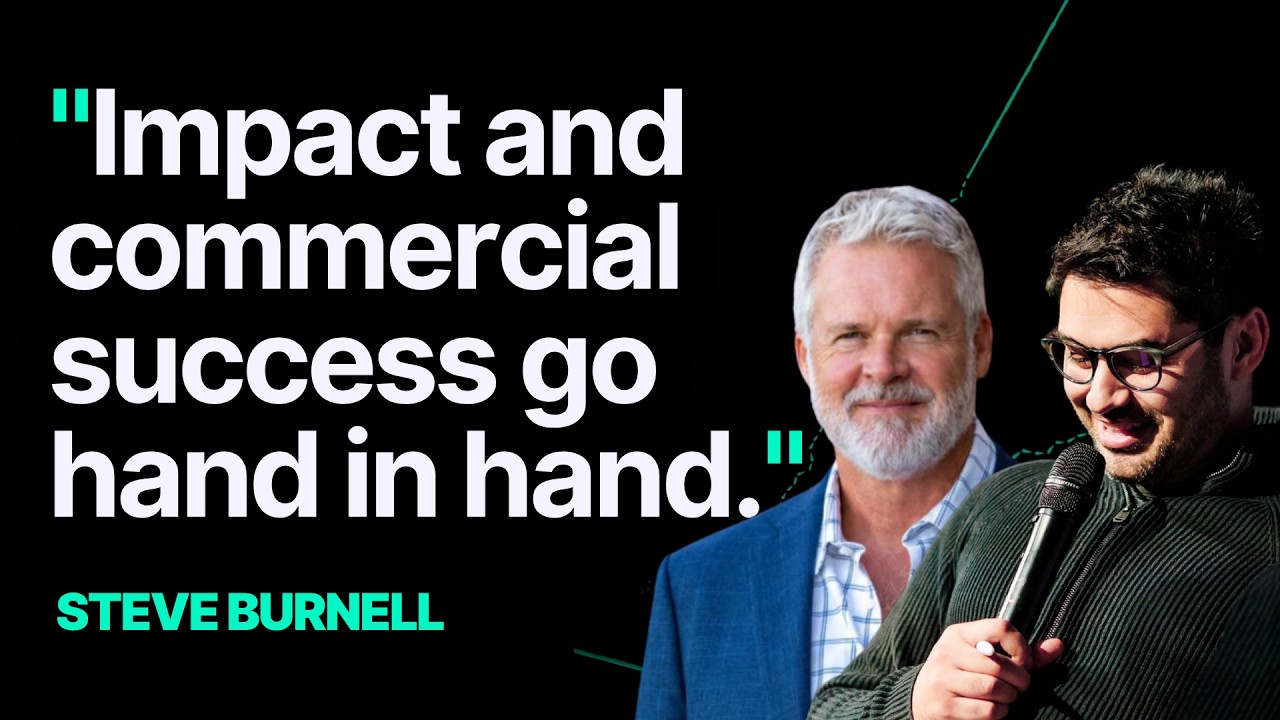
Dr Steve Burnell

Dr Sarah Hughes and Aahuti Rai